
What is Transportation?
Defining Transportation and Its Importance
Transportation refers to the process of moving people, goods, and services from one location to another. This essential function is fundamental to the economy and society, facilitating commerce, enhancing accessibility, and enabling social interactions. Transportation systems are the lifelines of cities, regions, and nations, connecting diverse areas and forming the backbone of both personal and commercial activity.
From the moment goods are manufactured to when they reach consumers, transportation plays a pivotal role. Modern transportation encompasses various modes—from traditional roadways to innovative aerial paths—each serving distinct needs. Today, you can explore various transportation options and services designed to meet specific requirements by visiting Transportation platforms that provide extensive data and options.
Historical Overview of Transportation Development
The evolution of transportation is a fascinating journey through human ingenuity and societal change. It dates back to ancient civilizations when the first humans devised ways to move themselves and their goods. Early methods included walking, using animals, and primitive boats. With time, developments transformed transportation with the invention of the wheel around 3500 BC, revolutionizing both land travel and trade.
Fast forward to the Industrial Revolution, which unleashed myriad transportation technologies. The introduction of steam-powered trains and ships paved the way for globalization, making it easier and faster to move goods and people across vast distances. The 20th century saw further transformation with the advent of the automobile and aviation, turning what once took weeks into hours—and ultimately transforming lifestyles around the globe.
Types of Transportation: An Overview
Transportation can primarily be classified into three broad categories:
- Land Transportation: This category encompasses vehicles like cars, buses, trains, and bicycles. It is the most used form of transportation, particularly in urban settings.
- Aerial Transportation: Includes various modes such as airplanes and helicopters. It is the fastest means of transportation and is crucial for long-distance travel and freight transport.
- Maritime Transportation: Involves the movement of goods and passengers over water, mainly through ships and boats. It remains an essential component for international trade.
Different Modes of Transportation
Land Transportation: Buses, Cars, and More
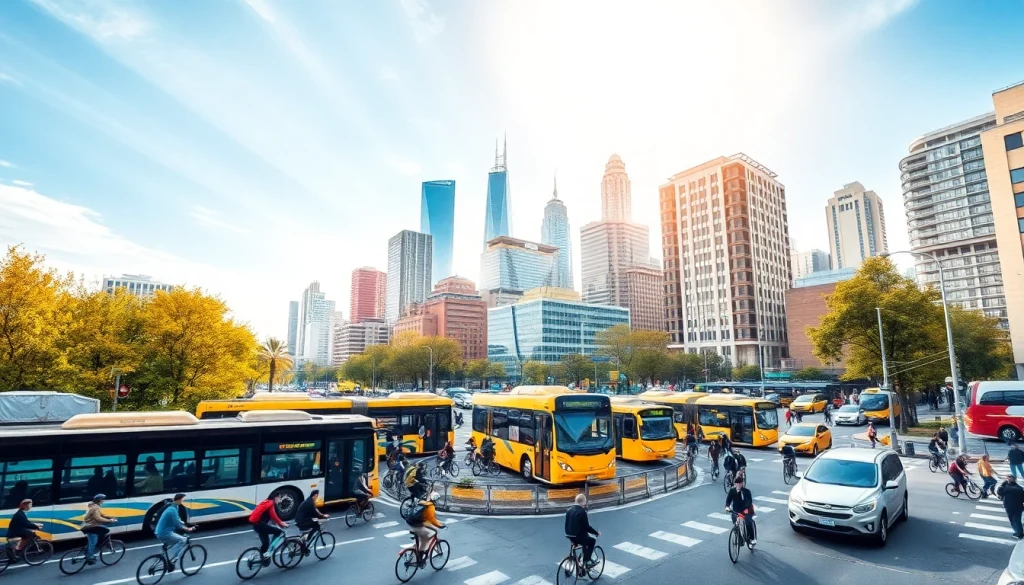
Land transportation constitutes the largest share of most regions’ transport network and serves multiple purposes. Cars are perhaps the most recognizable form, offering personal mobility that facilitates daily commutes. Buses serve public transport needs, often running on fixed routes, thereby contributing to a reduction in traffic congestion and pollution.
Moreover, rail systems, whether freight or passenger trains, are integral components of land transportation, particularly for moving bulk commodities and connecting urban centers. Advancements such as electric and hybrid vehicles are becoming increasingly popular, aiming to address environmental concerns associated with traditional gas-powered engines.
Aerial Transportation: The Role of Aviation
Aerial transportation revolutionized travel since the early 20th century. Today, air travel accounts for a significant portion of the global tourism industry. Airlines operate thousands of flights daily, connecting cities and countries and enabling the rapid movement of goods across the globe.
The aviation sector continuously innovates, incorporating advanced technology to enhance safety, efficiency, and passenger experience. Concepts such as drones and vertical takeoff and landing (VTOL) vehicles are paving the way for future urban air mobility, promising to tackle urban congestion in smart cities.
Maritime: The Critical Importance of Shipping
Maritime transport remains vital, with roughly 90% of global trade transported by sea. Shipping not only connects continents but also enables nations to engage in international commerce efficiently. Modern container ships can carry thousands of containers at once, making it an economical choice for bulk shipping.
Additionally, ports are evolving to accommodate larger vessels, integrating advanced technology to streamline loading and unloading processes. However, this growth comes with challenges, including environmental regulations and the need for sustainable practices to minimize ecological impacts from shipping activities.
Impact of Transportation on Society
Transportation and Economic Growth
Transportation significantly influences economic growth by linking producers and consumers, thus facilitating trade. Well-developed transportation networks reduce shipping times and costs, which can directly enhance businesses’ competitiveness. For instance, the establishment of highways spurred the growth of suburbs and enabled farmers to access markets more easily.
Regions with effective transportation systems often experience an influx of businesses, creating jobs and improving the economy. Moreover, multinational corporations rely heavily on logistics and transportation to streamline their supply chains, optimizing operations across borders.
Environmental Concerns and Sustainable Practices
With the rise of transportation has come significant environmental consequences. The transportation sector is a major contributor to greenhouse gas emissions, demanding urgent attention to develop sustainable systems. As cities grow, pollution and traffic congestion are becoming critical challenges.
To counter these issues, there is a shift towards sustainable transportation practices. Initiatives include promoting public transportation, encouraging the use of electric vehicles, and developing bicycle-friendly infrastructures. Additionally, innovations such as ridesharing services and autonomous vehicles could reshape urban transport, reducing the environmental footprint.
How Transportation Influences Urban Planning
Transportation systems shape the design and function of cities. Urban planners often prioritize transportation infrastructure when developing city plans, often considering accessibility to improve quality of life. The placement of transit lines or highways can dictate commercial activities and influence residential areas’ desirability.
The concept of transit-oriented development (TOD) is gaining traction, which focuses on building higher-density communities near transit hubs, promoting public transport over car dependency. Such initiatives can reduce the overall carbon footprint while providing residents with easier access to jobs and services.
Challenges in the Transportation Industry
Infrastructure Limitations and Solutions
Infrastructure challenges present substantial barriers to optimizing transportation systems. Aging infrastructure, such as bridges and tunnels, requires significant investments to ensure safety and efficiency. Traffic congestion is also a pressing issue that infringes on productivity and increases pollution.
To combat these challenges, many governments and organizations are investing in sustainable infrastructure improvements. Smart technologies are being deployed to enhance traffic management, and funding has increased for public transit projects to alleviate congestion and improve service reliability.
The Future of Transportation: Innovations and Technology
The transportation landscape is undergoing radical changes driven by technological advancements. Electric vehicles are increasingly adopted, while autonomous vehicle technology continues to evolve, promising to reduce traffic accidents significantly and minimize reliance on personal ownership.
Additionally, innovations in logistics, such as blockchain for supply chain transparency and real-time data analytics for optimizing routes, are changing the way goods are transported. These technologies not only enhance efficiency but also ensure more sustainable practices, aligning with global climate goals.
Safety Regulations and Compliance Challenges
Safety is paramount in transportation. With the complexity of modern transportation networks comes the challenge of ensuring compliance with various safety regulations. Drivers, transportation companies, and manufacturers must adhere to rigorous standards to mitigate risks associated with road safety, cargo security, and even cybersecurity in the case of automated systems.
Ongoing training and certification programs are essential in maintaining safe practices while integrating new technologies. Regulatory bodies continuously update guidelines to reflect changing technological landscapes and societal expectations, emphasizing the need for a proactive approach to safety in transportation.
Choosing the Right Transportation for Your Needs
Comparative Analysis of Transportation Methods
When selecting a transportation method, several factors come into play, including cost, convenience, speed, and environmental impact. For example, while air travel is the fastest, it also tends to be the most expensive and carbon-intensive option. Conversely, maritime transport is slow but is often more cost-efficient for shipping large quantities of goods over long distances.
Land transportation provides flexibility and can adapt to various needs—from personal vehicles to public buses—but often competes with time and environmental considerations. Understanding these dynamics can help individuals and businesses make informed choices about their transportation options.
Factors Influencing Transportation Choices
Several factors can influence an individual’s or organization’s transportation choices including:
- Distance: Longer distances oftentimes necessitate quicker modes like air travel.
- Cost: Budget constraints can heavily influence which mode of transportation is feasible.
- Time Sensitivity: Urgency often results in the preference for air or express delivery services.
- Environmental Impact: Increased awareness of ecological issues encourages more individuals to consider sustainable options.
Case Studies: Effective Transportation Solutions
In various regions, innovative transportation solutions have emerged as responses to unique challenges. For instance, cities like Copenhagen have become renowned for their bicycle infrastructure, promoting cycling as a primary mode of transport and reducing reliance on cars.
Similarly, Singapore has invested heavily in public transport systems, including an extensive rail network, that efficiently connects residents while significantly reducing traffic congestion. These case studies exemplify how tailored transportation solutions can enhance urban livability and sustainability.