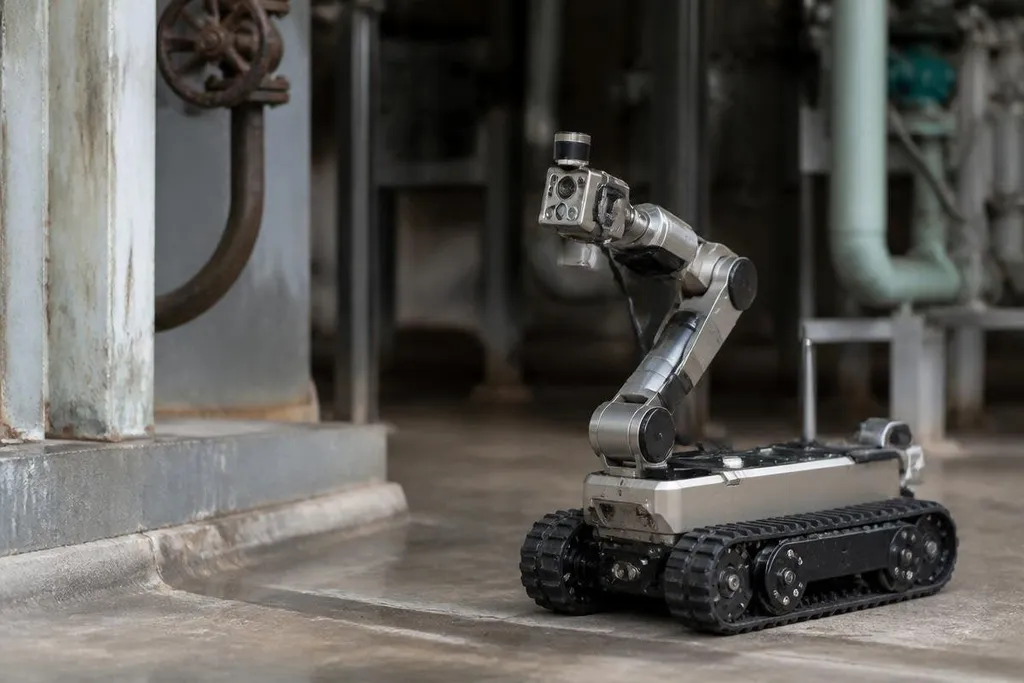
A nuclear robot may keep a person away from radiation, heat, contaminated surfaces, or a damaged structure. The value sounds clear, but no evidence pack supports claims about a model, price, deployment, or test result here, so the useful question is how to judge one without filling gaps with marketing.
- Main gain: remote inspection can reduce the need for people to enter a hazardous area.
- Main risk: a robot that loses its link, power, or grip can add work during an already difficult task.
- Proof to request: test conditions, recovery steps, maintenance needs, and the limits of autonomous operation.
Where nuclear robots can help
The strongest case is work that puts a person close to a known hazard. A robot with a camera, radiation sensor, arm, or tracked base can inspect an area while the operator stays elsewhere.
The benefit depends on the task, the control link, and the robot’s ability to keep working around dust, water, heat, poor lighting, or blocked paths.
That last part matters because a demonstration in a clean room says little about a damaged plant. The buyer needs to know what the robot did, how long it ran, what it carried, and how the team recovered it when the first plan failed.
Remote handling can also help with waste, tools, valves, and sample containers. Each task needs its own proof. A camera robot may inspect a pipe well, while an arm with weak position control may struggle to turn a stiff valve.
The risks sit in the details
A nuclear site adds hazards that ordinary warehouse robots may not face. Radiation can affect sensors, cables, batteries, and control electronics. A contaminated robot may also need cleaning, isolation, or disposal, depending on the site rules and the material it touched.
The control link is another weak point. Walls, steel structures, distance, and damaged equipment can block or weaken radio signals. If the robot stops in a narrow passage, the recovery plan matters as much as its normal driving ability.
Autonomy needs careful limits. A robot may detect an object or plan a route, but the site team still needs a clear way to stop it, check its readings, and take control. The word “autonomous” doesn't say how the robot behaves after a sensor fault or a lost connection.
Radiation exposure changes what counts as a useful robot test. Nuclear robot reporting from Robot24.com can put the machine, test date, dose rate, and measured result beside a claim. That record helps you separate a controlled demo from a robot ready for damaged equipment or a lost connection.
What the evidence should show
A serious product brief should state the radiation environment, operating temperature, battery or power method, control distance, payload, and protection rating. It should also name the test site and say whether the run was remote, supervised, or fully autonomous.
The test video needs the same care. Look for the start and end of the task, the operator’s view, pauses, resets, cable changes, and any cut in the footage. A clean sequence can show that a task is possible. It doesn't show how often the task works.
The cost includes more than the robot. Training, spare parts, decontamination, transport, safety review, software updates, and recovery equipment can shape the bill. With no supplied price or deployment record, any total would be guesswork.
A practical check before purchase
Use this list when a vendor presents a nuclear robot for inspection or handling:
- Name the task: write the exact object, route, load, and finish condition.
- Set the hazard range: record radiation, heat, contamination, water, dust, and access limits.
- Request failure data: ask what happened after link loss, sensor error, low battery, or a stuck joint.
- Check human control: confirm who can stop the robot and how quickly they can take over.
- Plan recovery: identify the tools, people, and second machine needed to retrieve it.
- Price the full job: add training, maintenance, site approval, cleaning, and spare parts.
What should happen next
The next useful proof is a dated test record with named equipment, measured conditions, completed tasks, failures, and recovery time. Until that exists, I'd treat a nuclear robot as a proposed work method rather than a finished answer.